
Alongside the continuing run of appeal decisions relating to veteran trees, recent changes to the National Planning Policy Framework (NPPF) have introduced several noteworthy developments for arboriculture and planning.
Of particular interest is the fact that the proposed amendment to the definition of ancient and veteran trees has not been adopted. The NPPF therefore continues to define these trees as being of exceptional value because of their age, size and condition. This remains at odds with Planning Practice Guidance, which refers to age, size or condition, leaving an inconsistency that has already been highlighted in a number of recent appeal decisions. Whether this is addressed through future updates to Planning Practice Guidance remains to be seen.
More significantly, the definition of ancient woodland has been expanded to explicitly include Ancient Wood Pasture and Parkland (AWPP) and Infilled Ancient Wood Pasture and Parkland (IAWPP). This broadens the scope of habitats considered ancient woodland and may have important implications for future site assessments and development proposals.
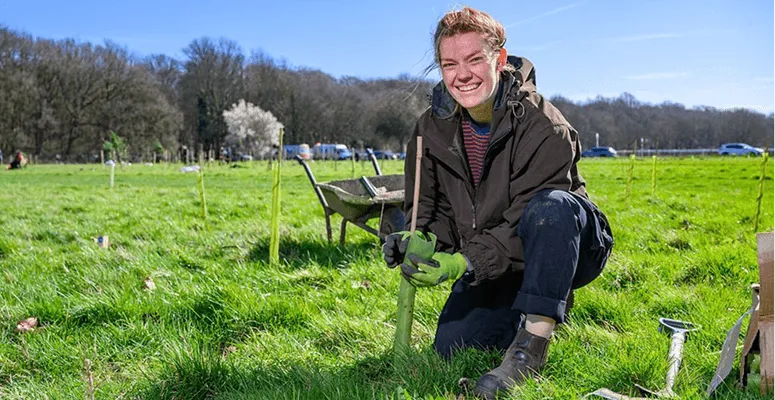
There are also several new policies relating to trees. New Policy N2 places greater emphasis on conserving and enhancing established trees and hedgerows where they provide visual, historic, or nature conservation value, moving away from the previous blanket expectation that all trees should be retained wherever possible. Meanwhile, Policy N3 strengthens requirements for tree planting within new developments, emphasising climate resilience, long-term management, and the principle of planting the right trees in the right places. This introduces an interesting discussion around balancing climate resilience with biodiversity objectives, particularly where species selection for Biodiversity Net Gain may not always align with long-term climatic suitability.
Taken together, these changes suggest a more strategic role for trees within the planning system, with increased recognition of their contribution to climate adaptation, environmental resilience, and wider green infrastructure. This along with the pragmatic approach to defining veteran trees is a welcome change to national planning policy.